Hillcrest Farm
Local History
History local to the Hillcrest
Explore four historical events which occurred in proximity to Hillcrest Farm.
Explore
Four local stories
1776
Cumberland's call for Independence
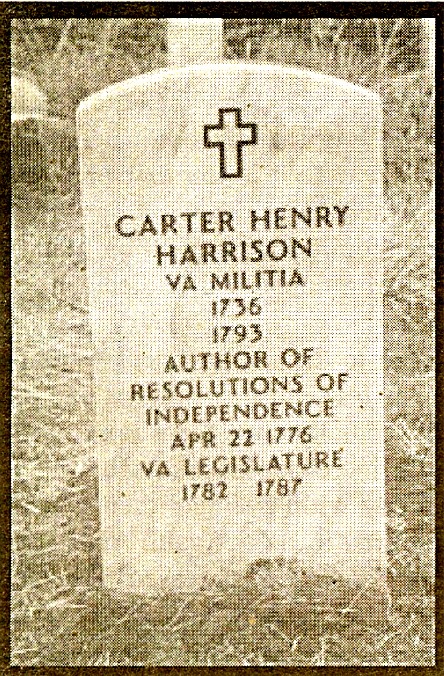
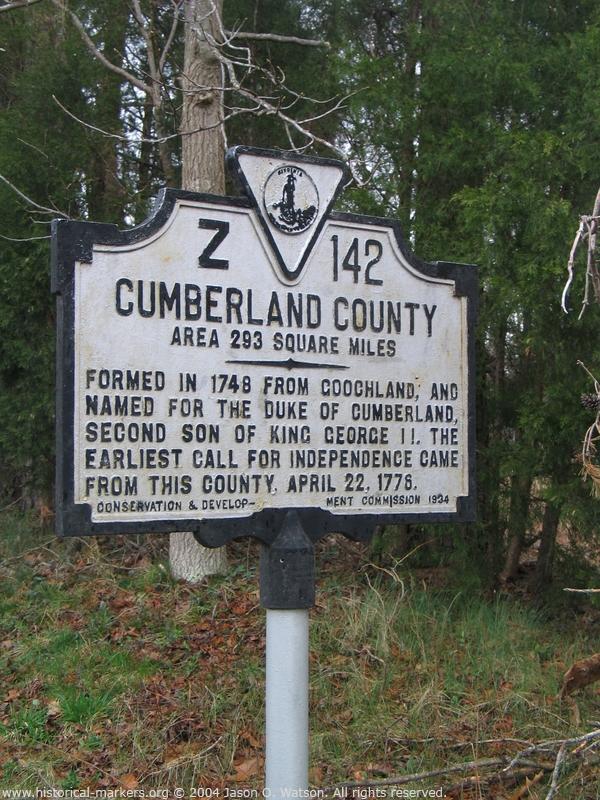
It is of note that in the months before the beginning of the Revolutionary War, the County of Cumberland's Legislature was the first Colonial Legislature to formally vote and direct its representative at the Continental Congress to call for Independence from England. Today, to commemorate this first call to freedom, the people of Cumberland County celebrate Patriot's Day. The patriot who drafted such legislation was Carter Henry Harrison, and his residence was within several miles of where Hillcrest now resides.
The first positive call for American Independence issued by a governmental body was led by Cumberland County. From the balcony of Effingham Tavern, Carter H. Harrison read the Committee's instructions to the county delegates to the State Convention:
We therefore, your constituents, instruct you positively to declare for an Independency, that you solemnly abjure any allegiance to His Brittanie Magesty and bid him a good night forever...
The Virginia Convention decided to follow Cumberland's lead and this resulted in the Virginia Resolutions which were presented to the Continental Congress and embodied in the Declaration of Independence.
Whereas, on April 22, 1776, Mr. Carter Henry Harrison, from the porch of Effingham Tavern at Cumberland Court House, did instruct elected delegates of this County to vote for independence from the British government at the Virginia Convention of May 6, 1776, and Whereas, this was the First Call for American Independence issued by a publicly elected governmental body, and Whereas, this event of the First Call for Freedom is unique, historic, and ever serves as an example of self-government in the Cause of Liberty.
1781
The Battle of Point of Forks
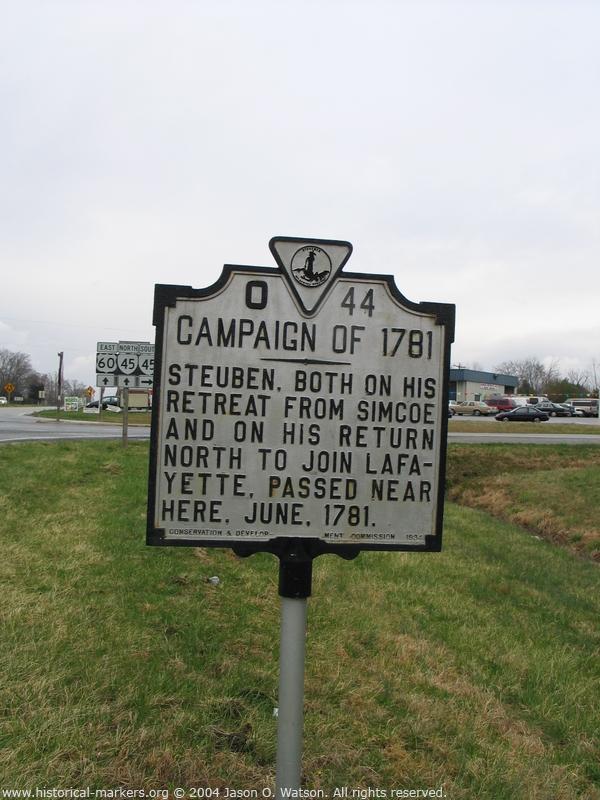
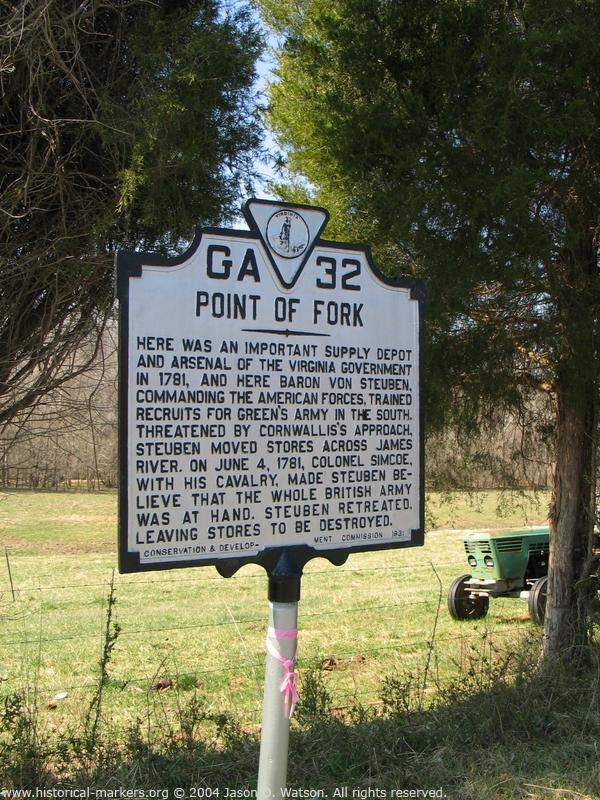
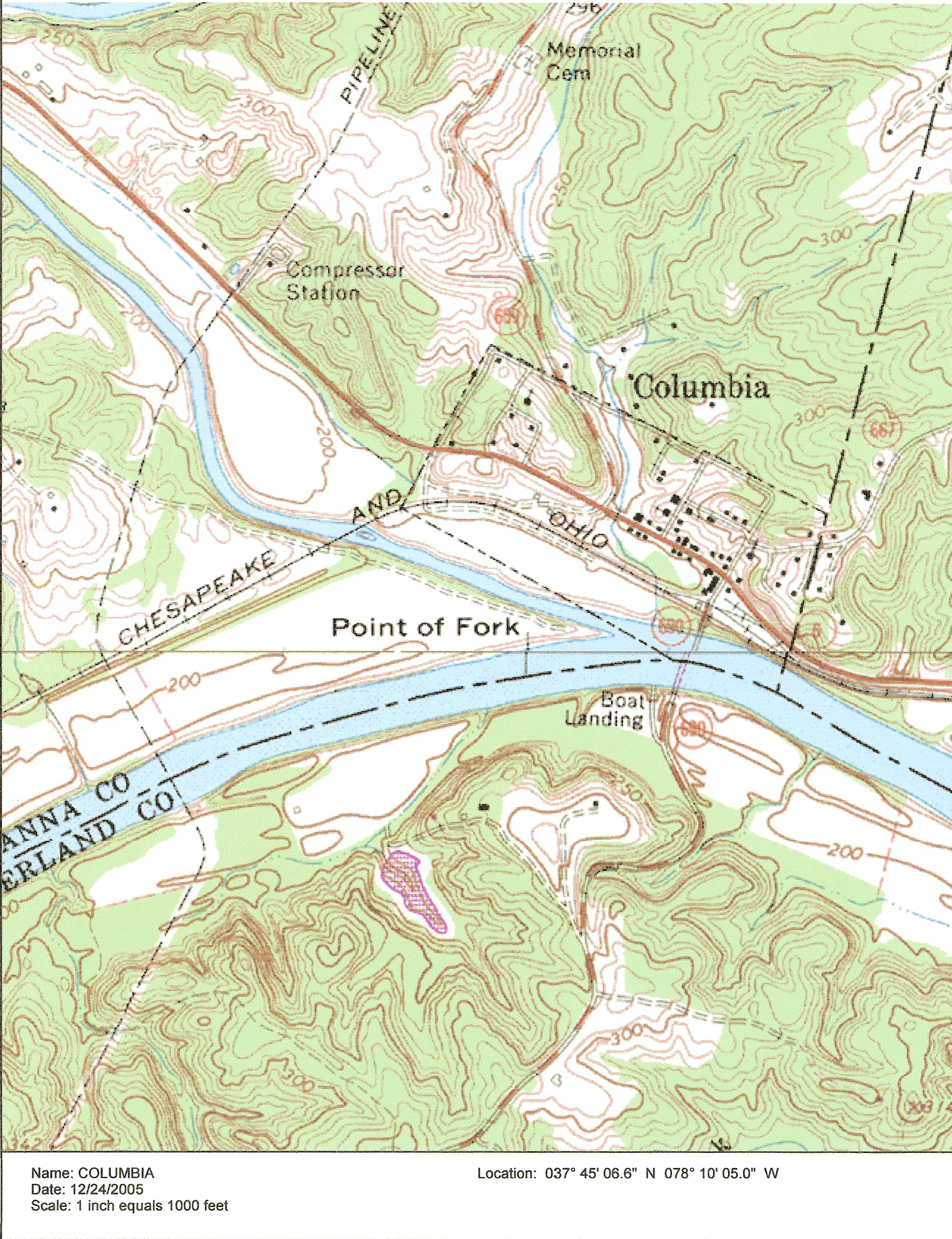
The Point of Forks is the juncture of the Fluvanna River and the James River at what is now the location of the town of Columbia, just a few minutes drive north of Hillcrest. During the Revolutionary War there was a large supply depot there, under the command of General von Steuben, a German national fighting for the revolutionaries.
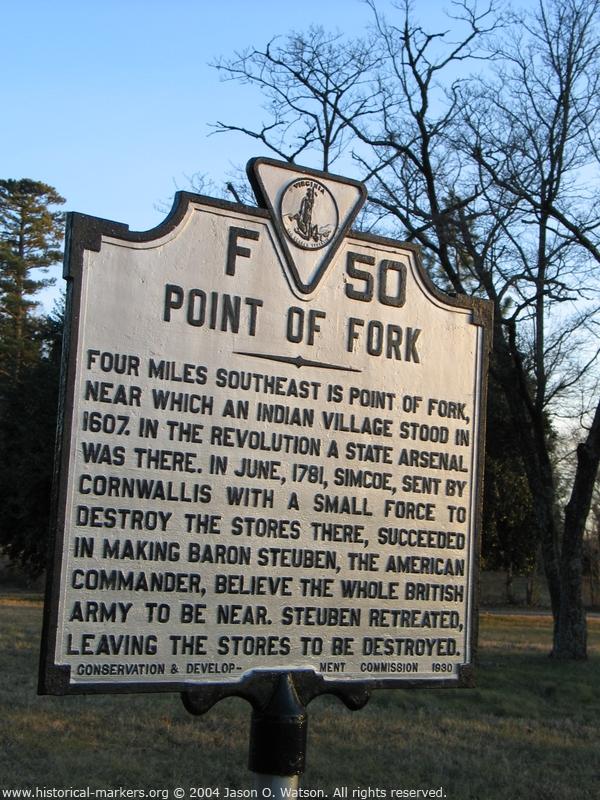
While Cornwallis was making his way up the James River during the Virginia Campaign of 1781, he sent a small company of British troops under the command of General Simcoe to scout the supply depot. Although von Steuben held the upper hand with a larger contingent of men, he was tricked by Simcoe into believing the entire British Army had arrived on the James just north of the Point of Forks. Simcoe accomplished this by lighting a series of campfires along the James River, giving the impression of a large contingent of men camping for the night in anticipation of a daylight raid.
In the middle of the night von Steuben retreated south toward Farmville, leaving behind a large store of supplies which were captured by Simcoe the next day without a fight. This dubious battle became known as the Battle of the Point of Forks. The depot was recaptured some short time later by the famous young revolutionary, General Lafayette. Cornwallis would surrender at Yorktown within the same year.
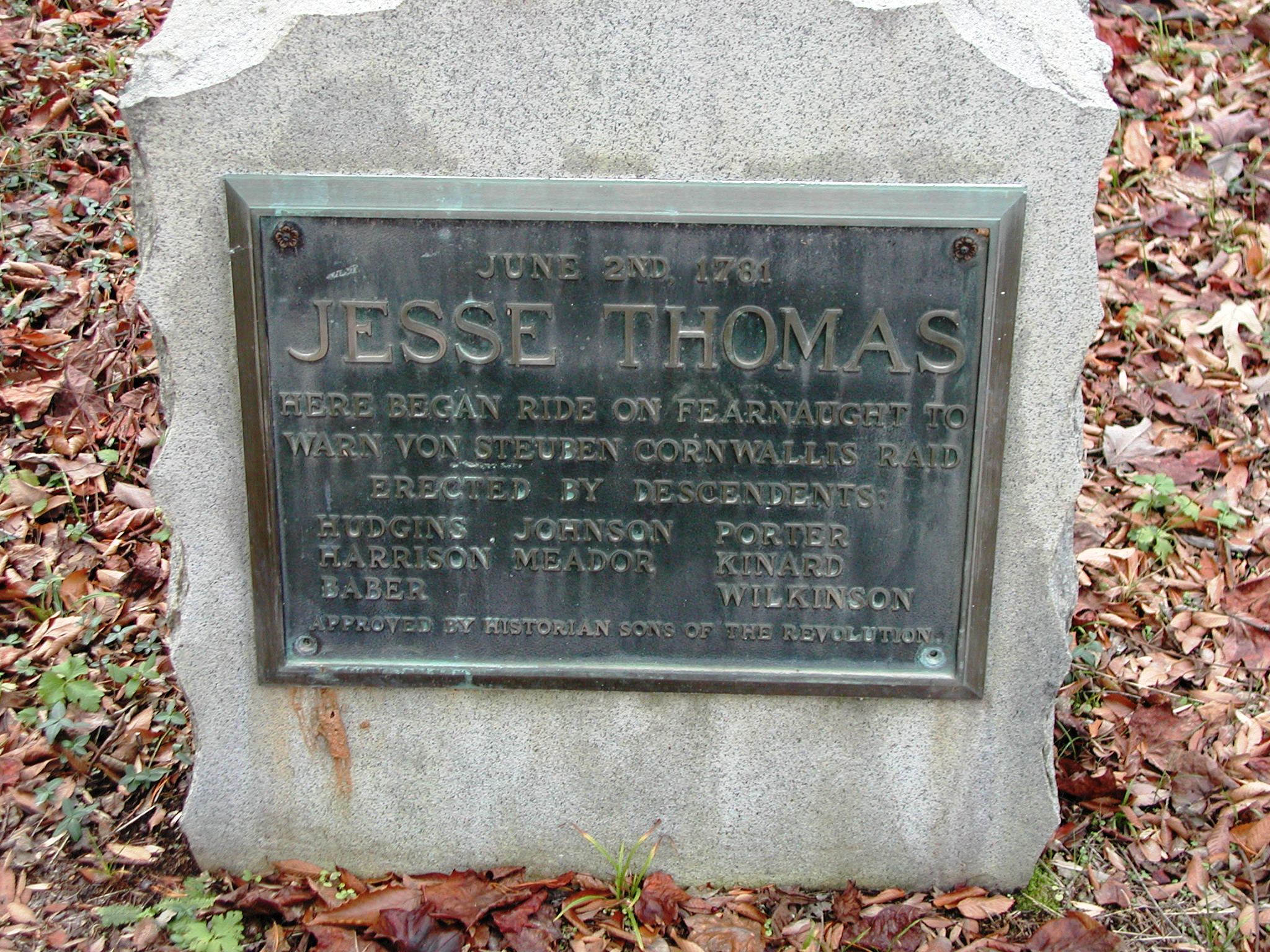
It is also of note that on the evening of June 2, 1781, Colonel Jesse Thomas rode from his homesite located just a couple of miles from Hillcrest to warn von Steuben of Simcoe's approach to the Point of Forks. Jesse Thomas rode his infamous horse, Fearnaught. There is a commemorative plaque in the Cumberland State Forest at the old homesite of Jesse Thomas. His timely warning allowed Baron von Steuben to avoid capture and transfer most of the stores from the arsenal at that location.
1865
Lee's final journey home
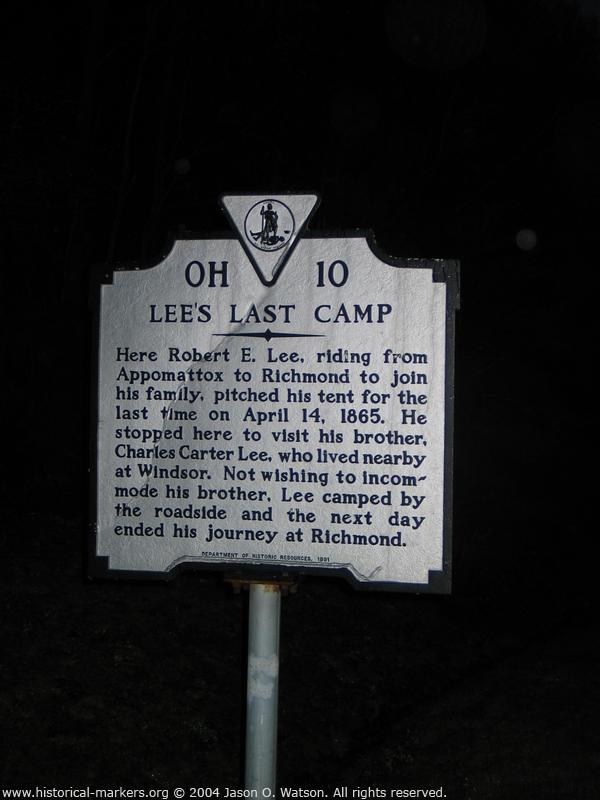
The Civil War ended on April 9, 1865 at the Appomattox Battlefield, with the formal surrender consummated on April 12 at Appomattox Courthouse. Appomattox is less than an hour's drive from Hillcrest. After the formal surrender proceedings, General Lee made his way home to Richmond, the journey home taking three days, escorted along the way by a small contingent of Union soldiers.
The first night of the 12th he spent camped at the Cumberland-Buckingham border on what is now Route 60. The second night was spent at Flannigan's at Trice's Mill, at the junction of Route 690 and Route 612, a short five miles from Hillcrest. The third and final night of travel was the night of the 14th, where he camped at the roadside across from his brother's residence in Powhatan. It was the night of April 14 that President Lincoln was shot, only to die the next day on April 15, 1865.
Local Heritage
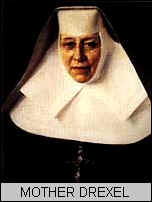
Saint Katharine Drexel and St. Joseph's Shrine
In the late 1800s a wealthy English immigrant named William Wakefield settled in the town of Columbia, a few miles north of Hillcrest. He was a devout Catholic and had nine children, three of whom entered religious life. One son, Richard, became a priest and was eventually commissioned by his father to erect a chapel in Columbia so that Richard could say Mass there when he visited the homestead during his vacations. This became known as the Wakeham Chapel, the first Mass being held in 1884. Mass was held at this chapel until the death of Mrs. Wakeham in 1891, and then it remained vacant for a period of time.
In early 1900 Sister Katharine Drexel started a mission, St. Frances de Sales, in Powhatan to serve the poor Indian and Black indigent of the local community. One day she traveled to Lynchburg by train, stopping in Columbia at a small train station along the way. As she looked up from the station to the top of a hill nearby, she noticed a gilt cross gleaming through the tree tops. She asked her traveling companion whether there was a Catholic church located there, but to her companion's knowledge no Mass had been held at any church between Richmond and Lynchburg.
When Sister Drexel returned to Powhatan she learned from one of her students that there indeed had been a Catholic chapel in Columbia, but it had not been used for some number of years. Sister Drexel returned to investigate the presumed abandoned chapel. As she entered the chapel at the top of the hill, she was surprised to find that the chapel had been meticulously cared for, swept and cleaned, with fresh linen and flowers.
She heard steps behind her, turning to see an old Black man looking at her with keen interest. He told her he was Uncle Zach and had been with the Wakehams for many years. His daughter Rebecca was the student in Powhatan who had informed Sister Drexel of the Wakeham Chapel. Uncle Zach had become a devout convert during the time that the chapel was active, and once it closed he took it upon himself to keep the chapel well maintained, hoping and praying that one day Mass would once again be held there.
Sister Drexel then convinced the local Bishop to arrange for Mass to once again be held monthly at the chapel, and she also started a local mission there. Eventually Mass was held weekly, and the chapel was renamed St. Joseph's Chapel. Sister Katharine Drexel was canonized a Saint in the year 2000 by Pope John Paul II. Eventually the small chapel in Columbia became known as St. Joseph's Shrine of St. Katharine Drexel. The local Bishop dedicated a shrine in her honor at the chapel on December 17, 2006.